
Benchmarking Excellence: Tool Defines ‘Good Innovation’ in the Food System
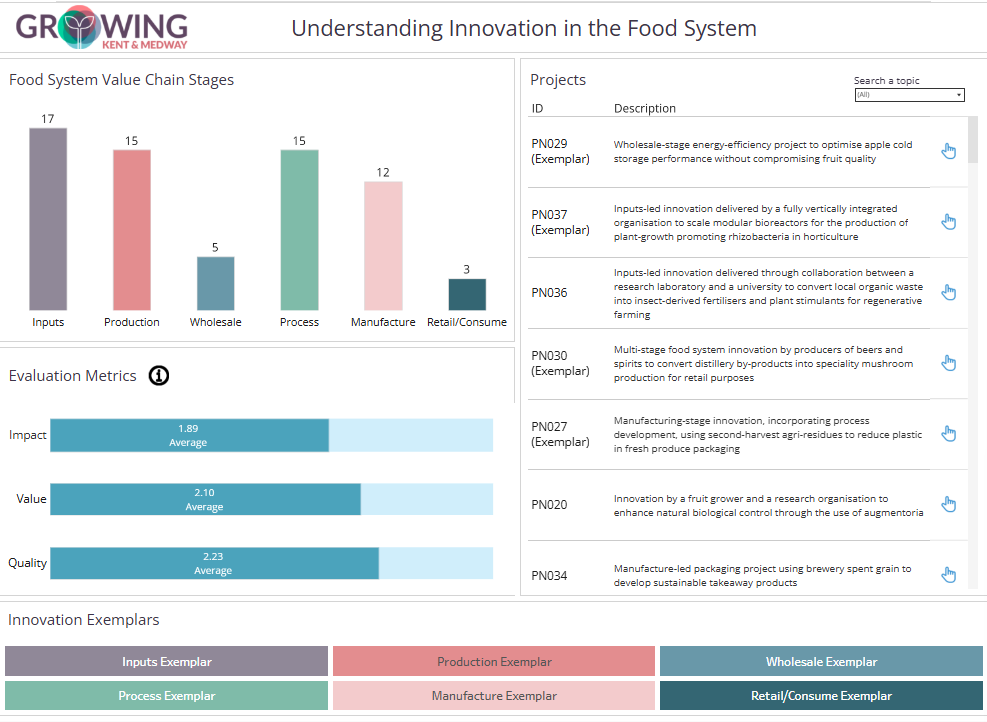
Growing Kent & Medway has unveiled an Innovation Benchmarking Tool designed to help food and drink businesses evaluate and enhance the success of their research and development projects.
In an industry increasingly defined by the need for sustainability, digital transformation, and resilience, knowing how to "do innovation well" is a critical competitive advantage. To provide clarity for the sector, we commissioned an objective analysis of over 70 of our diverse innovation projects, representing an investment of more than £4 million in their grant funding.
The result is an interactive Innovation Dashboard and benchmarking framework that identifies the specific characteristics that drive high-impact outcomes across the food system value chain. The work was delivered by ZPZ Consultancy Services.
Simon Barnes, Director, Growing Kent & Medway, said: “The outcome of a healthy food system is better health, and better wealth. To drive transformation in the way we produce food, and the types of food we eat, we need great innovation.
“Due to the fragmented nature of the food and drink sector, we are less bold and ambitious in innovation investment as an industry. We hope our new benchmarking evaluation tool will demonstrate the key characteristics of successful innovation, giving confidence and de-risking the process for business owners.”
The Three Pillars of Innovation Success
The tool evaluates projects against three core measures, providing a roadmap for businesses to move from basic R&D to market-leading innovation:
- Value: This looks at the "leverage ratio," how much private investment a project attracts compared to public funds, and the "burn rate," which measures the momentum and active development of the project.
- Quality: The framework assesses the credibility of the delivery team and the realism of the project’s aims. Businesses that demonstrate a clear track record of collaboration and robust risk mitigation strategies consistently score higher.
- Impact: Truly "good" innovation must deliver across three sub-sectors: environmental (waste reduction and resource efficiency), economic (commercial scalability), and social (improved public health and community engagement).
Strategic Alignment with the Food Strategy
Beyond standard metrics, the benchmarking tool aligns project outcomes with the Defra 2025 Food Strategy. This ensures that food industry professionals can measure their progress against national priorities, including the circular economy, digitalisation and AI, carbon efficiency, and food system resilience.
"Innovation projects inherently come with risks," adds Simon Barnes. "By identifying the factors that underpin the most successful outcomes—such as the synergy between environmental sustainability and financial return—we can help businesses give their projects the best possible chance of success."
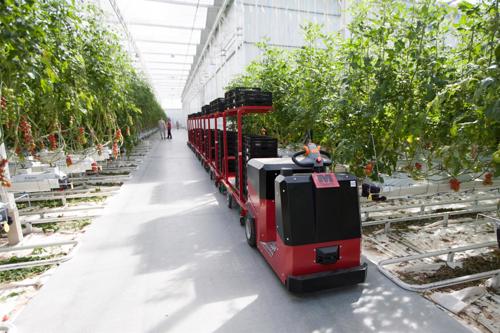
Driverless trolley at Thanet Earth's large glasshouse in Kent
Key Findings for Industry Professionals
The analysis, led by Dr Zita Stone and colleagues from Kent Business School at the University of Kent, revealed several "golden rules" for food system innovation:
- Collaborative Teams
- Projects led by diverse, vertically integrated consortia achieve stronger outcomes. However, the tool stresses the importance of defining Intellectual Property (IP) ownership at the outset to avoid derailing promising projects.
- Purpose-Driven Sustainability
- When environmental goals are directly linked to resource efficiency and financial benefits, projects gain more momentum.
- Phased Delivery
- Interestingly, the research suggests that a series of smaller, phased projects, from feasibility to demonstration, often deliver higher quality and better outcomes than single, long-term R&D marathons.
Explore the Dashboard
The new benchmarking tool is now available as an interactive dashboard, allowing food system actors, from primary producers to retailers, to explore the features of successful innovation.
To explore the Innovation Dashboard and learn more about the evaluation, visit: How to do innovation well.